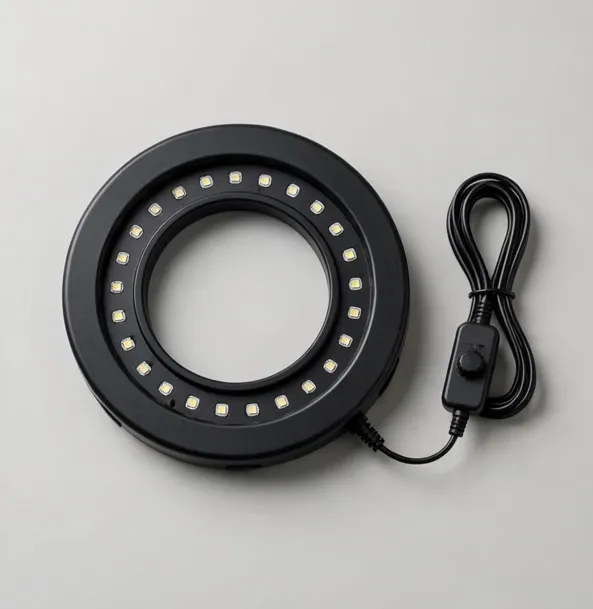
Shadow-free illumination for any microscope — 144 LEDs with a dimmer
MicroHub RingLight 144 LED Microscope Ring Light
USB output
$59.99
Sample catalog — order confirmed by email
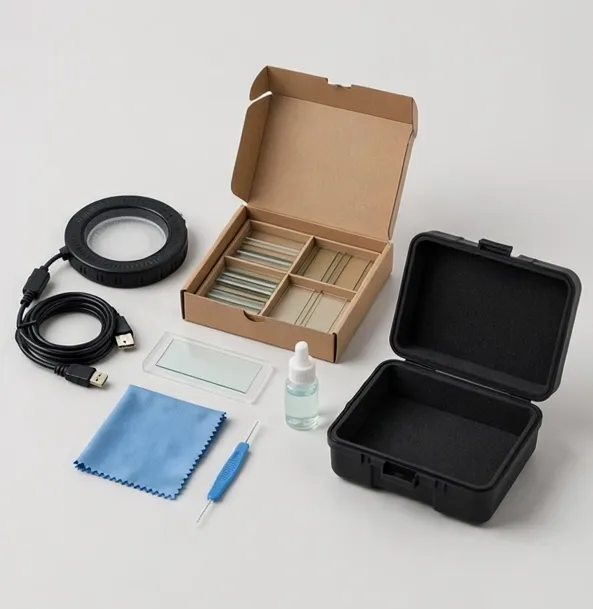
Accessories are where microscope value hides. The most common complaint about a new microscope — a dull, shadowy, hard-to-read image — is usually a lighting problem, and it is fixed by a ring light costing a fraction of the instrument. The second most common, "the measurements look off," is a calibration problem with a sixteen-dollar answer. This category is organized around those real upgrades rather than novelty.
Lighting leads: a ring light puts even, shadow-free illumination exactly where the lens looks, with a dimmer to manage glare on metal and polished surfaces. For transmitted-light work, slide quality is the parallel upgrade: professionally prepared slides show structure that homemade first attempts rarely match, which is why the 100-piece set is a standard second purchase after any compound microscope.
Measurement and documentation follow: a stage micrometer makes on-screen measurement honest, and a camera turns an optical head into a teaching and recording station. Stands change the instrument's whole working style — a boom stand converts a fixed stereo head into a bench workstation — and cases and cleaning kits protect the investment on the road and over years.
Compatibility is stated on every accessory page: ring-light thread sizes, camera mount types, slide format, stand mount size, case interior dimensions. Check those three or four numbers against your instrument before ordering; accessories are wonderfully standard, but the standards have sizes.
Everything here is chosen to fit the MicroHub range first and the common standards second, so cross-compatibility is the rule rather than the exception.
Buying order, if you are equipping a bench from nothing: light first for inspection instruments, specimens first for compound instruments, then a stand upgrade or camera depending on whether your frustration is posture or privacy of view. Calibration joins the list the moment measurements start being recorded. Cleaning and carrying gear protect everything else on the list.
Every accessory page states its compatibility numbers — thread sizes, mount types, interior dimensions — because accessory regret is almost always a size mismatch, not a quality problem. Measure your instrument once, keep the numbers with your records, and this category becomes the cheapest satisfaction in microscopy.
A final buying principle for this category: accessories should be bought against a named frustration. Blurry edges → calibration and light. Missed defects → ring light and a method. Sore neck → stand or camera. Lost evidence → capture workflow. If an accessory does not answer a frustration you have actually felt, it is shelf decoration. The pages here are organized around those frustrations deliberately, so the fix you need is findable in one pass.
Compatibility data is kept with the same care as the microscopes themselves: if an adapter, thread or interior dimension is not stated on an accessory page, ask before ordering and we will confirm in writing. Microscopy standards are old and stable, which makes accessories unusually safe purchases — provided the three or four numbers are checked. That discipline, plus buying against named frustrations, is the whole method of this category.
Shadow-free illumination for any microscope — 144 LEDs with a dimmer
$59.99
Sample catalog — order confirmed by email
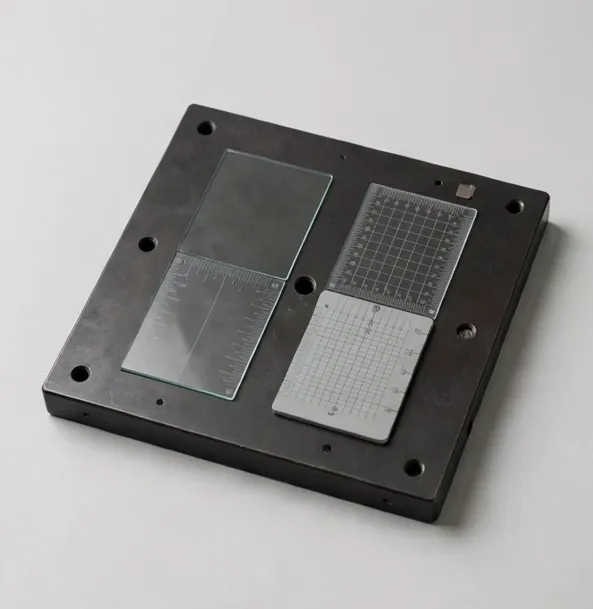
Make your measurements mean something: 0.01 mm stage micrometer kit
$24.99
Sample catalog — order confirmed by email
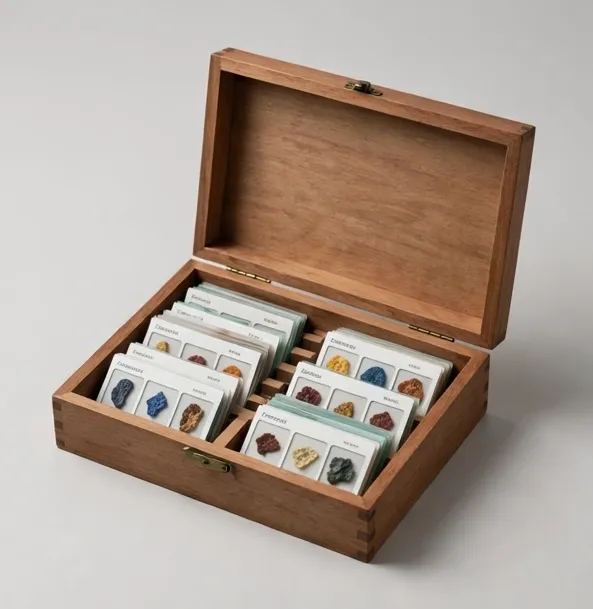
100 ready-to-view specimens in a wooden box — botany, zoology and more
$89.99
Sample catalog — order confirmed by email
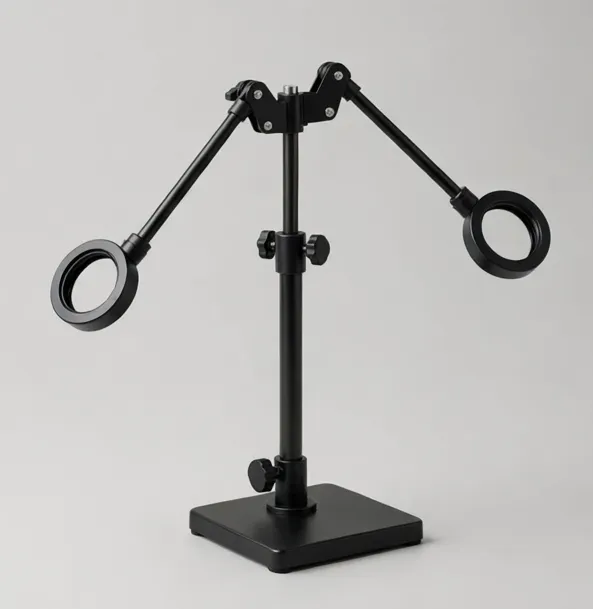
Give your stereo head room to work: double-arm boom stand, heavy base
$349.99
Sample catalog — order confirmed by email
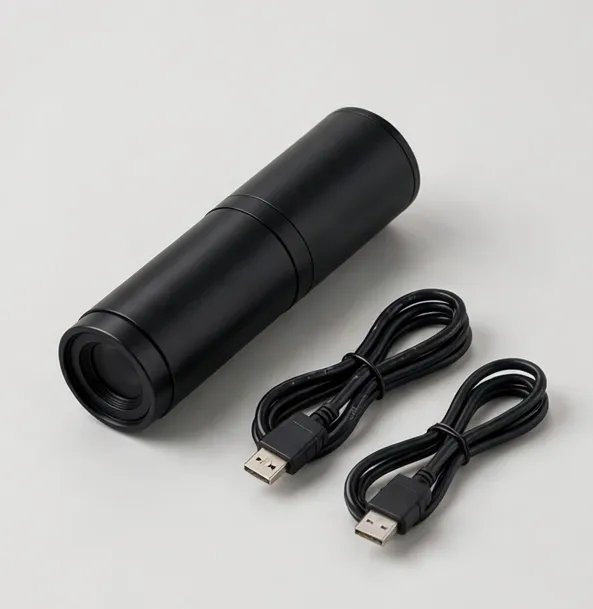
Turn your existing microscope into a 4K camera station
$279.99
Sample catalog — order confirmed by email
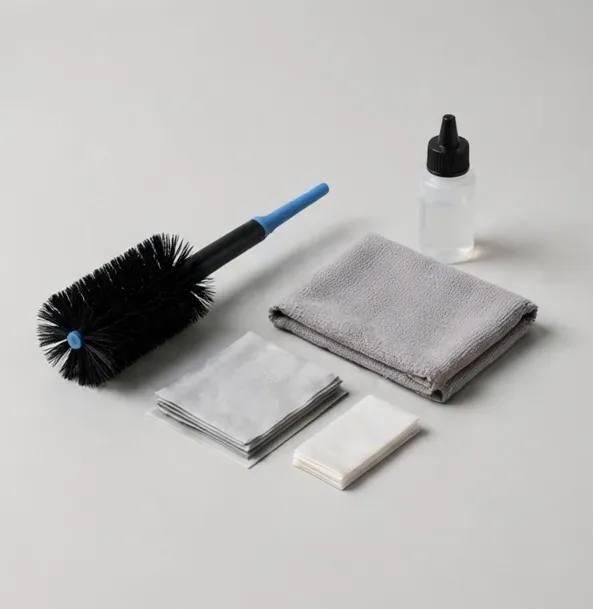
Keep the view clean: complete optics cleaning kit in a bench pouch
$19.99
Sample catalog — order confirmed by email
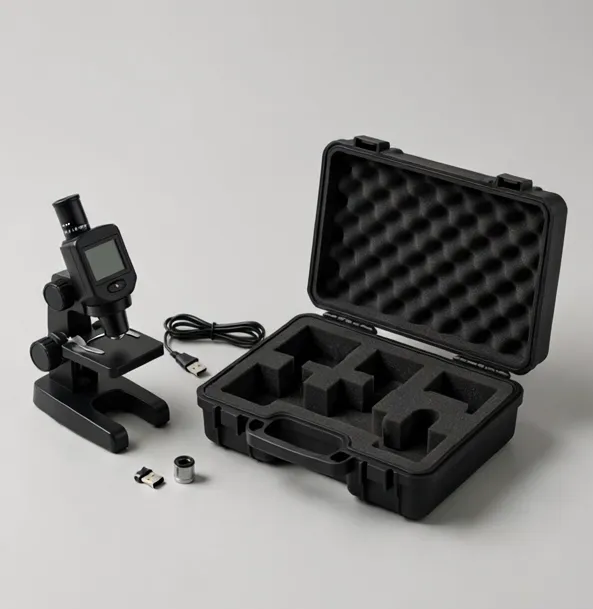
Carry your microscope like you mean it: hard shell, fitted foam
$39.99
Sample catalog — order confirmed by email
Ring light before new microscope. Even illumination is the largest single image-quality upgrade for inspection work.
A stage micrometer takes minutes per magnification and makes software measurement meaningful.
A microscope without specimens is furniture. A prepared set gives every session material from day one.
Thread diameter (ring lights), mount type (cameras/stands), interior dimensions (cases) — the product pages list them; measure yours.
A cleaning kit used correctly (blow, brush, then tissue) preserves coatings and clarity for years.
For inspection work, a ring light. For a compound microscope, a prepared slide set. Both cost little and change the experience more than any other purchase.
It fits lenses with 33–63 mm threads using the included adapters, which covers most stereo heads and many digital models. Measure your lens barrel diameter to confirm.
Place the stage micrometer under the lens, focus, and tell the software the known distance between two lines. Repeat at each magnification you measure with, and again if the camera or working distance changes.
They are standard 1×3 inch slides, which fit every MicroHub compound microscope and the vast majority of other brands.
Blow loose dust off with a blower, brush gently, and only then use lens tissue with a drop of solution, wiping from the center outward. Never use clothing or paper towels — they scratch coatings.
Interior usable dimensions are listed on the case page (about 11.8 × 8.7 × 4.3 in). Measure your microscope folded with its stand pieces and compare.
Still deciding? Try the Microscope Finder or compare models side by side.