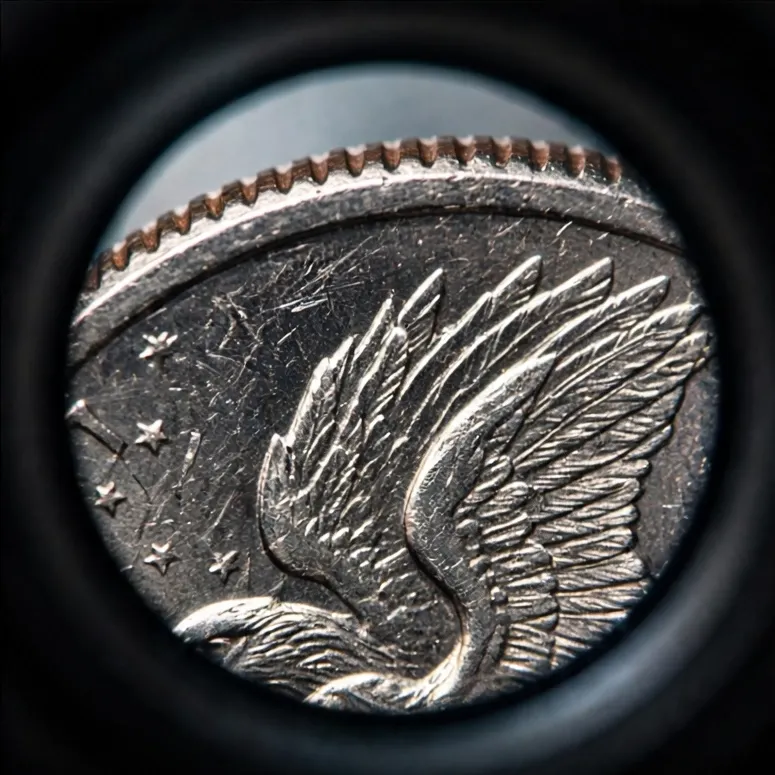
MicroHub — US Microscope Specialist
See More. Choose With Confidence.
Discover digital, stereo and compound microscopes selected for coin collecting, electronics repair, laboratory work, education and precision inspection.
Every magnification figure on this site states how it is derived — optical range first, digital zoom labeled as digital zoom — and each product page prints the instrument’s limits as plainly as its strengths.
SpecificationsStated with their derivation
PricingMarket rates — no fake markdowns
OrderingConfirmed by email — nothing charged online
SupportWritten answers from a monitored inbox
Shop by Application
Start from the work, not the hardware. Each application page explains the specifications that matter for the task and the models that meet them.
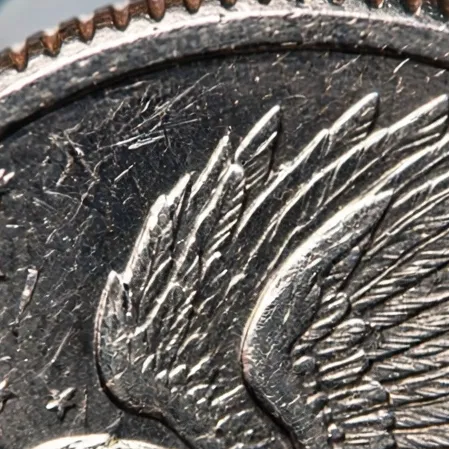
Error Coin Inspection
Variety hunting is detail work at the edge of visibility: a doubled die shows in the split of a letter serif; a repunched mint mark hides inside the curve of a D; a die crack announces a late die state worth a premium.
Explore Error Coin Inspection →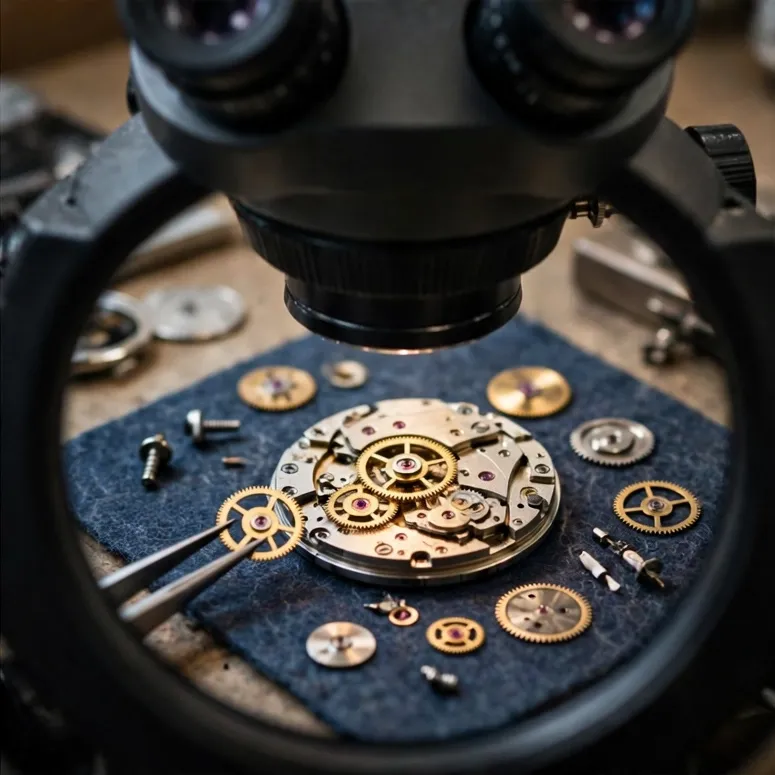
Jewelry Inspection & Watch Repair
Jewelers and watchmakers work in a world measured in tenths of millimeters, where the questions are physical: Is the prong fully seated? Is the jewel cracked? Is that gear tooth worn or broken? Stereo microscopes answer them because they preserve depth — you see the setting, not a picture of it — while leaving both hands free for tweezers, gravers and screwdrivers. The standard station is a continuous-zoom stereo head (7x–45x) on a boom arm, so the microscope floats over the bench block and swings away between jobs.
Explore Jewelry Inspection & Watch Repair →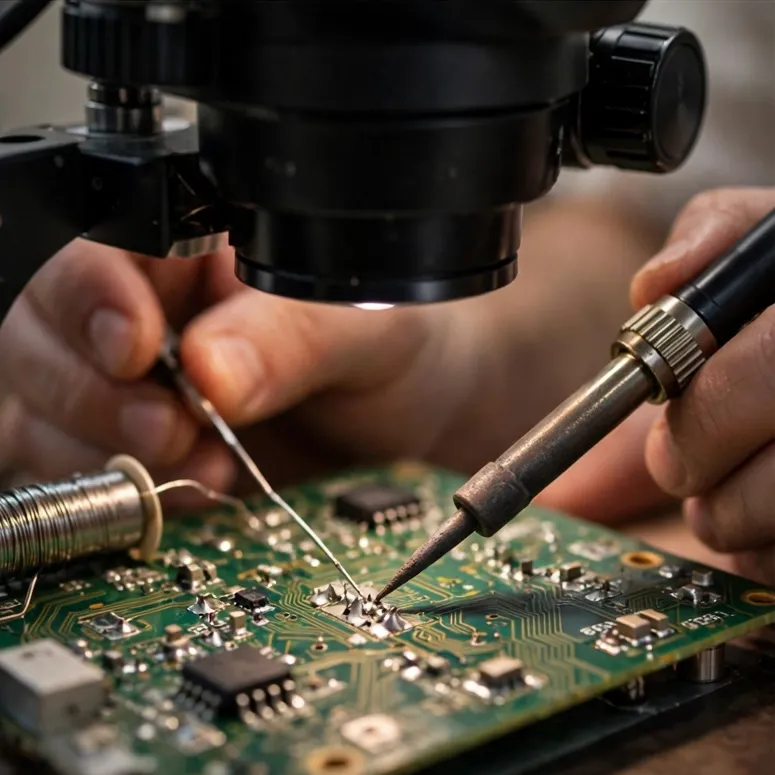
Electronics Repair & PCB Soldering
Board repair concentrates every microscope requirement into one bench: fine detail (0402 passives, 0.4 mm pitch pins), real-time hand work (iron, tweezers, hot air), and hours-long sessions that punish bad ergonomics.
Explore Electronics Repair & PCB Soldering →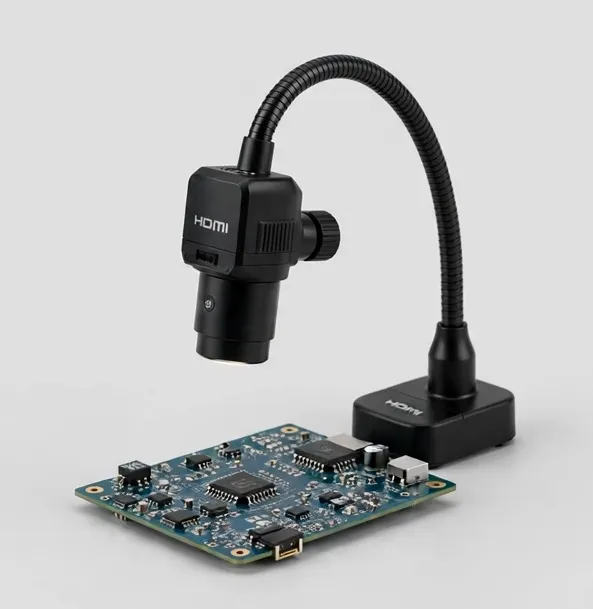
Mobile Phone Repair
Phone boards compress a computer into a few square inches, and board-level repair — the work that separates a repair shop from a parts-swap shop — happens entirely under magnification.
Explore Mobile Phone Repair →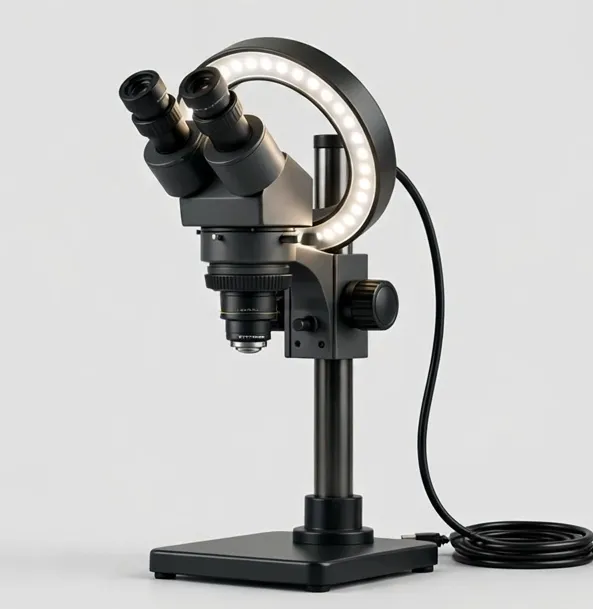
Industrial Quality Control
Quality control turns looking into evidence.
Explore Industrial Quality Control →
School Science & STEM
A school microscope program succeeds on logistics as much as optics: instruments that survive being carried by twelve-year-olds, light that works without a darkroom, specimens ready before the lesson starts, and a way for the whole class to see what one student found.
Explore School Science & STEM →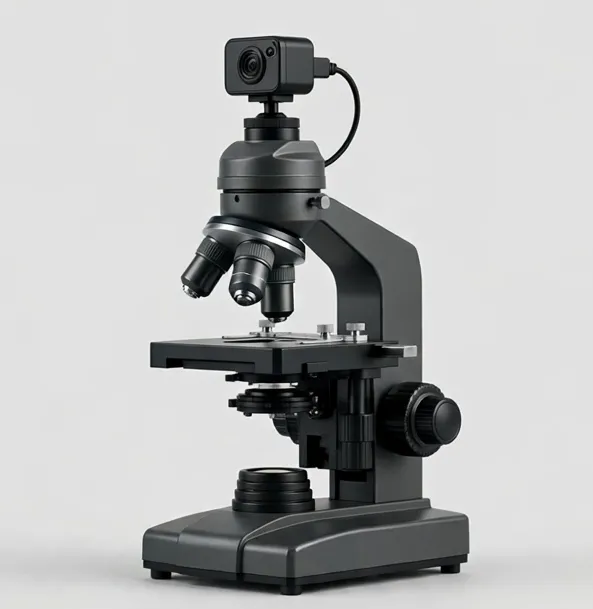
Laboratory Research
Routine laboratory microscopy — teaching labs, research-support benches, quality and materials checks — runs on compound microscopes specified for the work rather than the brochure: plan or achromatic objectives, a condenser that controls contrast, a stage that moves precisely, and illumination that stays even across a long day. The head decision mirrors the workflow.
Explore Laboratory Research →
Plant & Specimen Observation
Nature observation splits neatly in two, and the microscope choice follows the split.
Explore Plant & Specimen Observation →Featured Products
Selected for specification honesty and bench usefulness — not sales rank, and never badged with invented popularity claims.
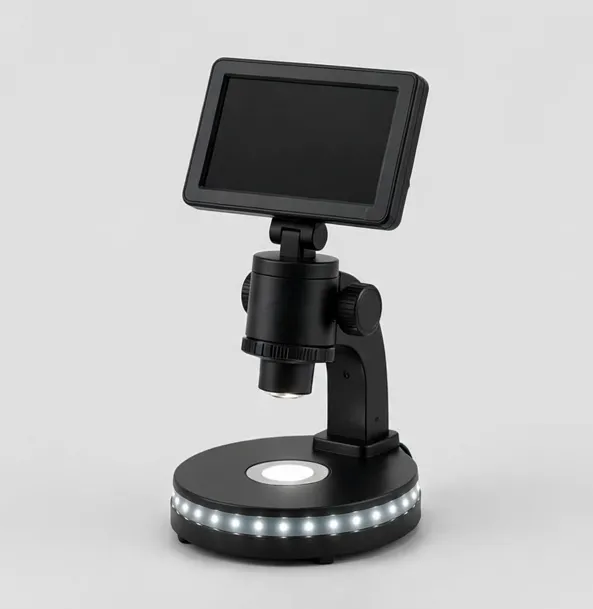
The all-round bench microscope: 7-inch screen, 1080p, LED base
MicroHub ViewPro 7" LCD Digital Microscope
Our most versatile screen microscope. A 7-inch IPS display, 1080p capture, dual lighting and a wireless remote for shake-free photos of coins, boards and small parts.
7-inch IPS LCD50x–1200xWorking distance to 4 in
$79.99
Sample catalog — order confirmed by email
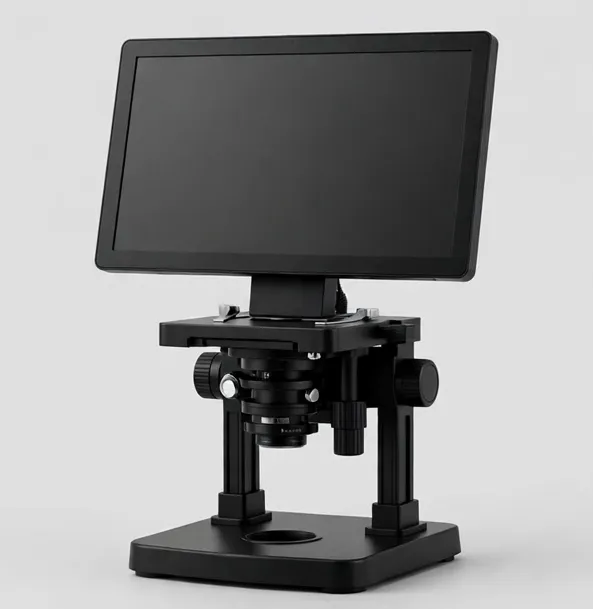
Big-screen 10.1-inch microscope with HDMI output for teaching and shared viewing
MicroHub ViewPro 10.1" LCD Digital Microscope
A 10.1-inch IPS screen, dual lens options and HDMI output make this the shared-view microscope for classrooms, training benches and detailed coin sessions.
10.1-inch IPS LCD10x–1600x across two lensesWorking distance to 6 in
$169.99
Sample catalog — order confirmed by email
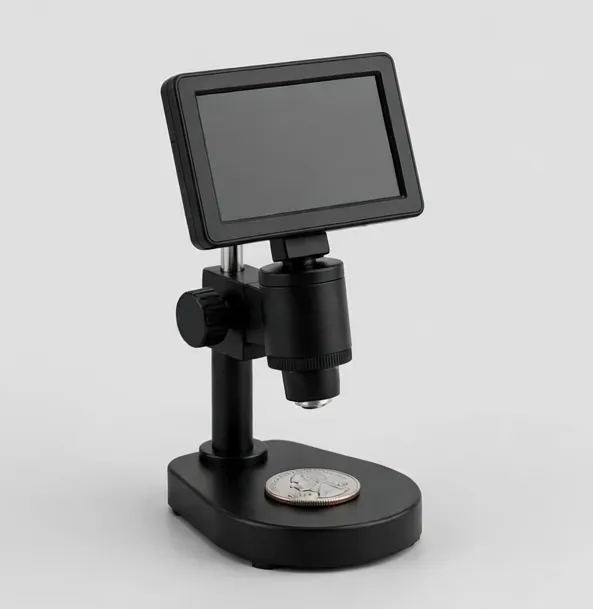
Whole-coin view on screen, with HDMI for closer die and mint-mark study
MicroHub CoinView 7" Coin Microscope
Built for collectors: a wide field of view that frames a whole large coin on the 7-inch screen, then zooms to mint marks and die details. HDMI output included.
7-inch LCD10x–1300xWorking distance to 5.5 in
$119.99
Sample catalog — order confirmed by email
4K HDMI camera microscope on a flex arm — autofocus keeps joints sharp while you work
MicroHub BenchHD 4K Autofocus Soldering Microscope
A 4K HDMI inspection camera on a flexible arm with autofocus and on-screen measurement. Long working distance leaves room for an iron, tweezers and hot air.
None built in — HDMI output to your monitorApprox. 10x–280x optical zoomWorking distance to 8 in
$289.99
Sample catalog — order confirmed by email
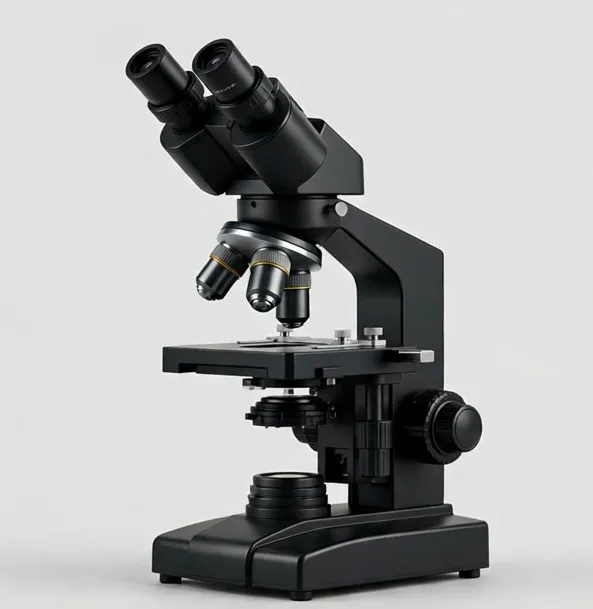
Binocular comfort for longer lab sessions, with a double-layer mechanical stage
MicroHub LabBino 40x–2000x Binocular Compound Microscope
A binocular compound microscope with two eyepiece sets (40x–2000x optical), Abbe condenser and a smooth double-layer mechanical stage for serious coursework and lab routines.
40x–2000x optical
$339.99
Sample catalog — order confirmed by email
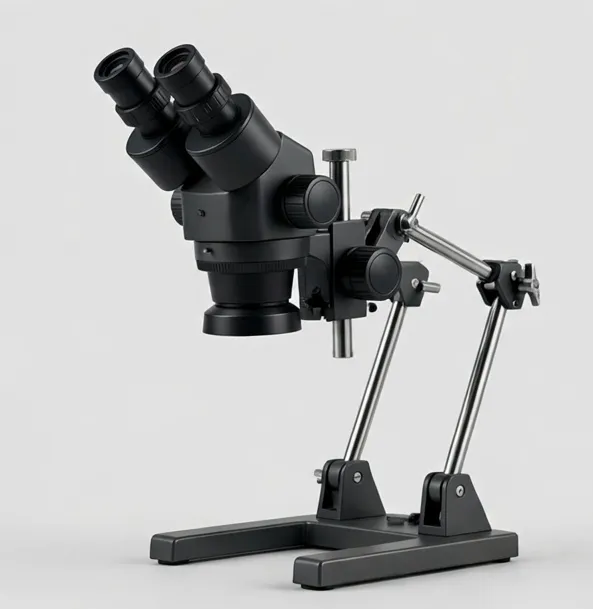
True stereo depth for inspection and repair — continuous 7x–45x zoom on a boom arm
MicroHub ZoomStereo 7x–45x Stereo Microscope on Boom Stand
A binocular stereo microscope with continuous 7x–45x optical zoom and a long boom arm. Real depth perception for soldering, jewelry, watch work and inspection.
7x–45x continuous optical zoomWorking distance to 4 in
$649.99
Sample catalog — order confirmed by email
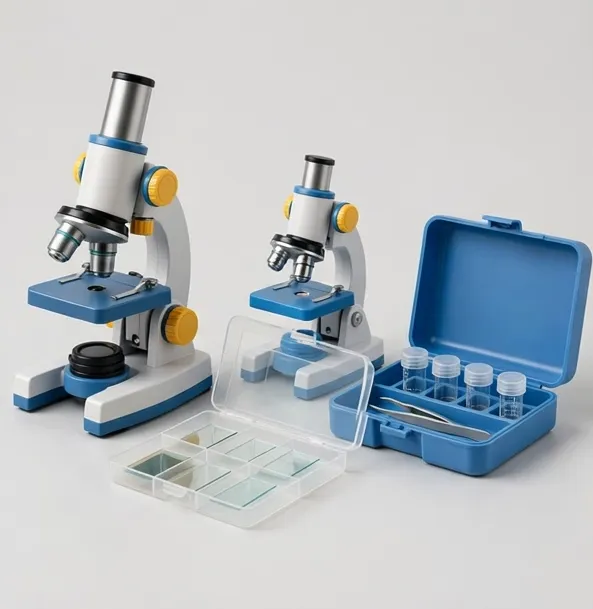
A real first microscope kit — glass optics, dual light, slides and case included
MicroHub JuniorLab Kids Microscope Kit 100x–1200x
A complete starter kit: metal-frame kids microscope (100x–1200x optical), 12 prepared slides, blank-slide supplies and a case. Batteries included in the workflow, not the app store.
100x–1200x optical
$39.99
Sample catalog — order confirmed by email
Shop by Microscope Type
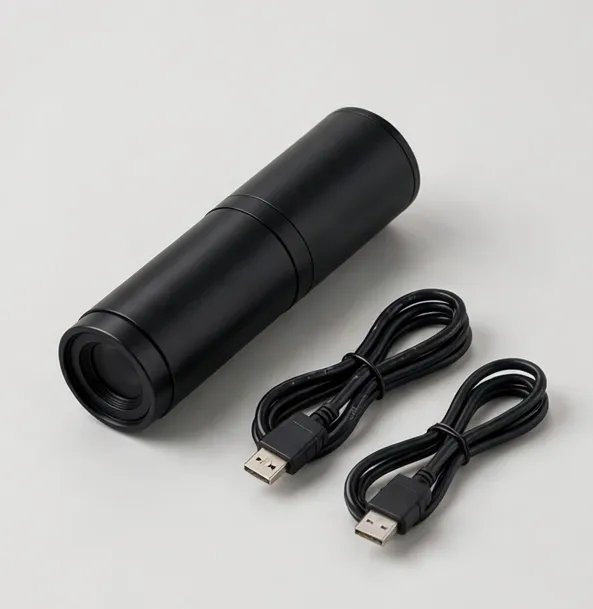
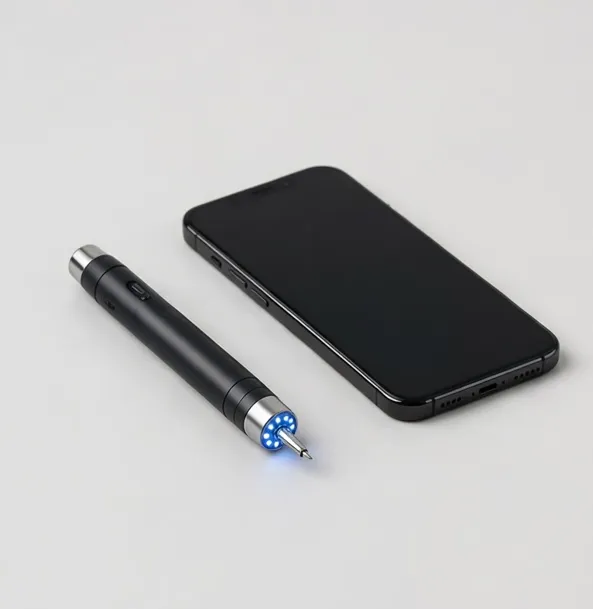
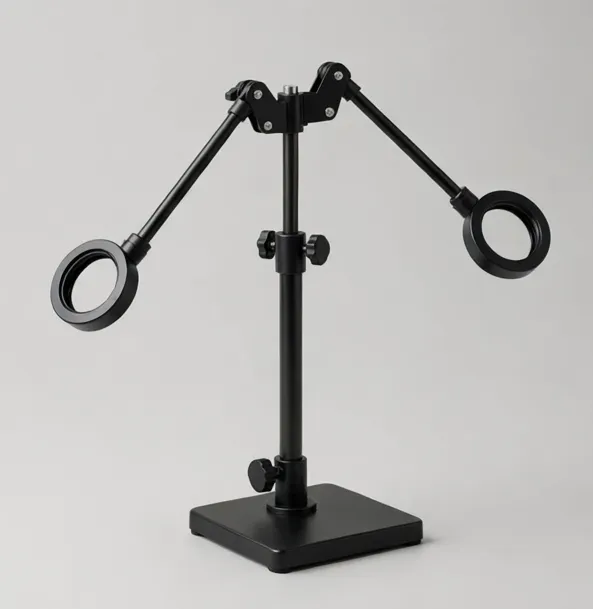
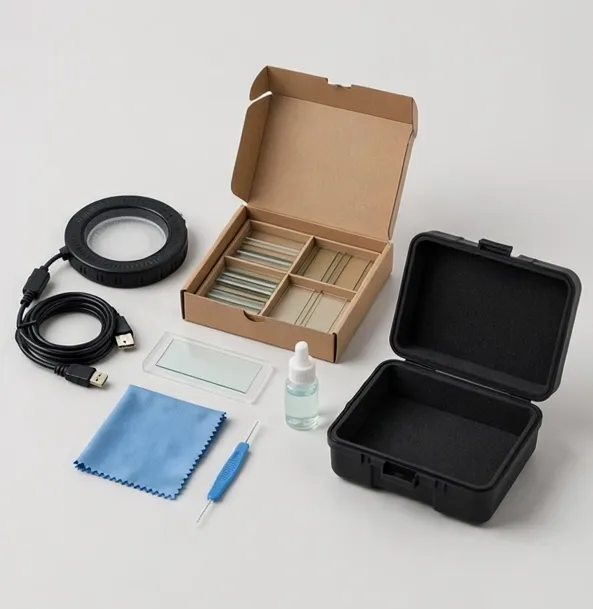
Guided Buying
Find the Right Microscope for Your Work.
The Microscope Finder scores the real catalog against your answers — no email required, nothing tracked:
- What will you inspect?
- What is your budget?
- What matters most — optical magnification, screen size, working distance, depth perception, image capture or portability?
How recommendations work
Each model is scored on use-case fit, budget fit and the priority you choose — drawn from the same specifications printed on its product page. Every recommendation explains why it matches, and when a cheaper model fits the task, the Finder says so.
For Coin Collectors
Wide whole-coin views, raking light for surfaces, and a scale package for weight records. A microscope documents a coin — authentication stays with the grading services, and our coin guide explains the full inspection method.
Whole-coin view on screen, with HDMI for closer die and mint-mark study
MicroHub CoinView 7" Coin Microscope
Built for collectors: a wide field of view that frames a whole large coin on the 7-inch screen, then zooms to mint marks and die details. HDMI output included.
7-inch LCD10x–1300xWorking distance to 5.5 in
$119.99
Sample catalog — order confirmed by email
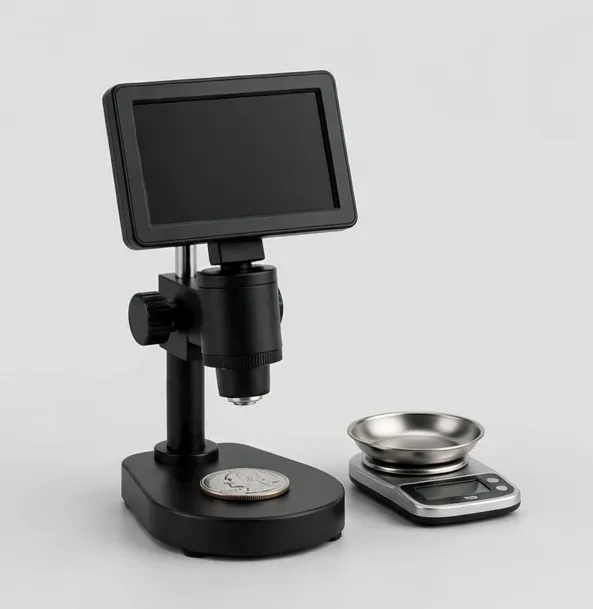
See it and weigh it: 7-inch coin microscope with a 0.001 g bench scale in the box
MicroHub CoinView 7" Coin Microscope with Precision Scale
The CoinView 7 package plus a separate 500 g / 0.001 g precision scale for recording coin weights alongside your photos — a useful first check for suspect pieces.
7-inch LCD10x–1300x
$129.99
Sample catalog — order confirmed by email
The all-round bench microscope: 7-inch screen, 1080p, LED base
MicroHub ViewPro 7" LCD Digital Microscope
Our most versatile screen microscope. A 7-inch IPS display, 1080p capture, dual lighting and a wireless remote for shake-free photos of coins, boards and small parts.
7-inch IPS LCD50x–1200xWorking distance to 4 in
$79.99
Sample catalog — order confirmed by email
Read: How to Inspect Coins with a Microscope · All coin microscopes · Error coin inspection
For the Soldering Bench
Working distance for your tools, an HDMI image with no lag, and light that removes hand shadows. Built for boards, phones and production rework.
4K HDMI camera microscope on a flex arm — autofocus keeps joints sharp while you work
MicroHub BenchHD 4K Autofocus Soldering Microscope
A 4K HDMI inspection camera on a flexible arm with autofocus and on-screen measurement. Long working distance leaves room for an iron, tweezers and hot air.
None built in — HDMI output to your monitorApprox. 10x–280x optical zoomWorking distance to 8 in
$289.99
Sample catalog — order confirmed by email
Two lenses, one boom arm: wide board view plus high-power detail, on HDMI and USB
MicroHub BenchScope Dual-Lens HDMI/USB Soldering Microscope
A boom-arm camera microscope with two swappable lenses — a wide lens for whole-board orientation and a detail lens for joints — feeding HDMI and USB at once.
None built in — HDMI output to your monitorApprox. 8x–260x optical across two lensesWorking distance to 9 in
$269.99
Sample catalog — order confirmed by email
True stereo depth for inspection and repair — continuous 7x–45x zoom on a boom arm
MicroHub ZoomStereo 7x–45x Stereo Microscope on Boom Stand
A binocular stereo microscope with continuous 7x–45x optical zoom and a long boom arm. Real depth perception for soldering, jewelry, watch work and inspection.
7x–45x continuous optical zoomWorking distance to 4 in
$649.99
Sample catalog — order confirmed by email
Read: How to Choose a Soldering Microscope · All soldering microscopes
For Classrooms & Young Scientists
Real instruments with glass optics — starter kits with slides in the box, dual-light models for specimens and slides, and demonstration stations for teachers.
A real first microscope kit — glass optics, dual light, slides and case included
MicroHub JuniorLab Kids Microscope Kit 100x–1200x
A complete starter kit: metal-frame kids microscope (100x–1200x optical), 12 prepared slides, blank-slide supplies and a case. Batteries included in the workflow, not the app store.
100x–1200x optical
$39.99
Sample catalog — order confirmed by email
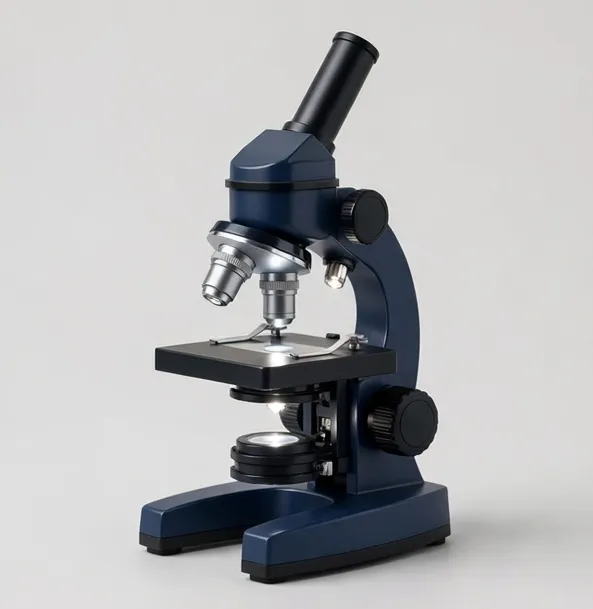
Slides and solid specimens in one student microscope, with dual lighting
MicroHub STEMLab Duo Dual-Light Student Microscope
One microscope for both worlds: compound viewing for slides and a low-power view for rocks, bugs and leaves, with dual LED light and a phone adapter for photos.
20x–2000x optical
$79.99
Sample catalog — order confirmed by email
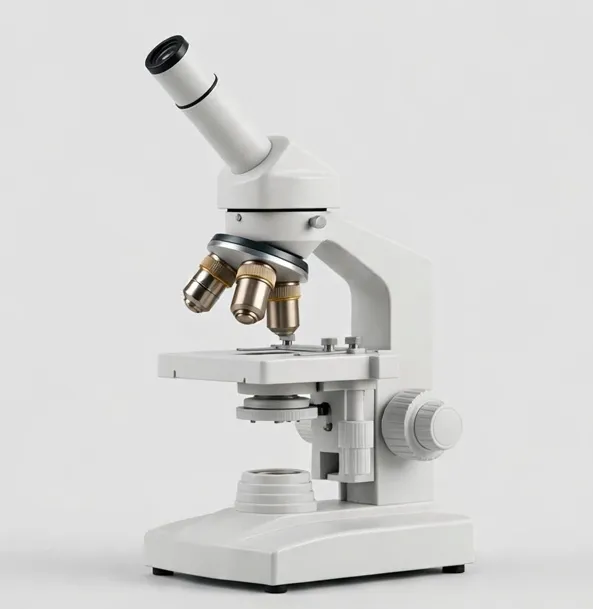
Honest student compound microscope: glass optics, LED illumination, metal frame
MicroHub LabMono 40x–1000x Compound Microscope
A monocular compound microscope with 40x–1000x optical magnification,achromatic objectives and LED light — the straightforward choice for school and home labs.
None — optical eyepiece viewing40x–1000x optical
$159.99
Sample catalog — order confirmed by email
For Laboratory Work
Compound optics for slides and specimens, trinocular heads for cameras, and documentation tools for teaching and records.
Binocular comfort for longer lab sessions, with a double-layer mechanical stage
MicroHub LabBino 40x–2000x Binocular Compound Microscope
A binocular compound microscope with two eyepiece sets (40x–2000x optical), Abbe condenser and a smooth double-layer mechanical stage for serious coursework and lab routines.
40x–2000x optical
$339.99
Sample catalog — order confirmed by email
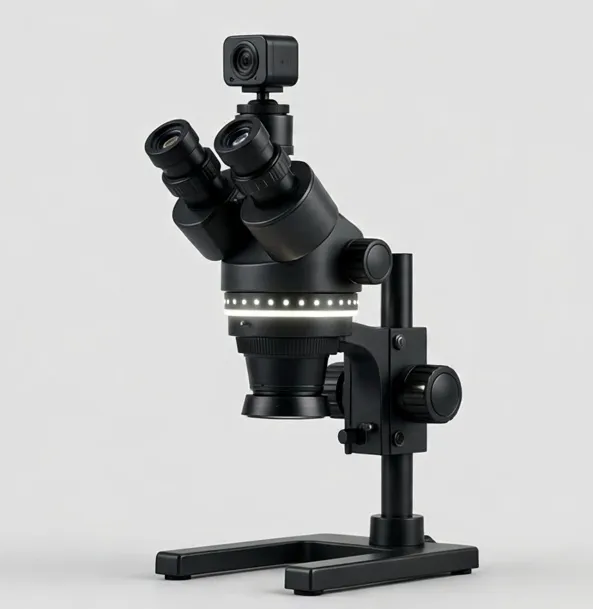
Teach and record at once: trinocular head with a 5MP USB camera included
MicroHub LabTrino 40x–1000x Trinocular Microscope with 5MP Camera
A trinocular compound microscope (40x–1000x optical) with a 5MP USB camera in the box — demonstrate through the eyepieces while the class watches the screen.
40x–1000x optical
$399.99
Sample catalog — order confirmed by email
Turn your existing microscope into a 4K camera station
MicroHub CamScope 4K HDMI/USB Microscope Camera
Add 4K HDMI imaging and USB capture to a trinocular or stereo microscope you already own. C-mount and eyepiece adapters included.
— (camera) screen
$279.99
Sample catalog — order confirmed by email
Compare the Specifications That Matter.
Pick any two or three microscopes and compare magnification type, working distance, display, image output, illumination, stand design and compatibility — side by side, with no marketing column.
Why specifications come first
A headline magnification number tells you almost nothing. Working distance decides whether tools fit under the lens; output decides whether a class or a team can watch; illumination decides whether surface detail survives. Our guides and comparison tool are built around the numbers that decide real work.
Buying Guides
How to Choose a Microscope
Most microscope regret comes from buying the specification instead of the job. This guide works the way a good salesperson would: start from what you will actually look at, rule out whole families of instruments, and only then compare numbers — including the magnification number, which deserves deep suspicion.
Read the guide →Microscope Magnification Explained
Magnification is the first number every buyer reads and the last one they should trust at face value. This guide explains what the number is made of, why two microscopes with the same lens can claim wildly different powers, and which figures correspond to the things you actually want to see.
Read the guide →How to Inspect Coins with a Microscope
A microscope rewards method. Random zooming finds random details; a repeatable inspection routine finds the hairlines, doubling and die markers that decide what a coin is and what it is worth. This guide sets out the routine experienced collectors use, in order.
Read the guide →How to Choose a Soldering Microscope
A soldering microscope is judged while your hands are moving. The specifications that decide whether it transforms your rework or gathers dust are not the ones on the box front. This guide ranks them the way bench technicians do: distance, latency, depth, stand, light — and only then magnification.
Read the guide →Trust & Support
How specifications are verified
Every magnification figure is published with its derivation — optical range first, digital zoom labeled. Where an instrument has a real limit (a microscope cannot authenticate a coin; an education model is not a diagnostic device), the limit is printed on the page.
Contact support
Questions go to a monitored inbox — harisleadgen8+microhub@gmail.com — and are answered in writing, so specifications and commitments stay clear. Contact page
Shipping
Confirmed orders are prepared for dispatch within 2 business days; standard US delivery typically takes 3–7 business days after dispatch, with tracking by email. Shipping policy
Returns
Unused items in original condition can be returned within 30 days of delivery, started by email and authorized in writing. Returns & refunds
Warranty
Microscopes and accessories carry a 12-month warranty against defects in materials and workmanship in normal use. Warranty policy
Payment & compatibility
Online payment is being set up, so orders are confirmed by email with payment instructions — nothing is charged on this website. Compatibility (Windows, macOS, HDMI displays) is stated on every product page.
Frequently Asked Questions
How do I choose between a digital, stereo and compound microscope?
By subject. Solid objects (coins, boards, parts) → digital or stereo. Slides and cells → compound. Hands-on work needing depth → stereo. Our Microscope Finder asks three questions and narrows it down.
Are your magnification figures real?
We state how every figure is derived: optical range first, digital zoom labeled as digital zoom. Digital zoom enlarges the image without adding resolution, and our product pages say so.
Can I pay online today?
Not yet — online payment is being set up. Orders are placed by email confirmation for now; the checkout explains exactly how it works before you commit to anything.
Do your microscopes work with Mac computers?
USB models listed as PC/Mac compatible appear as a standard camera on macOS and Windows. HDMI models work with any display. Each product page states compatibility.
Can a microscope authenticate a coin or grade a gemstone?
No. Microscopes help you observe and document. Authentication and official grading are specialist services, and we say so plainly on the relevant pages.