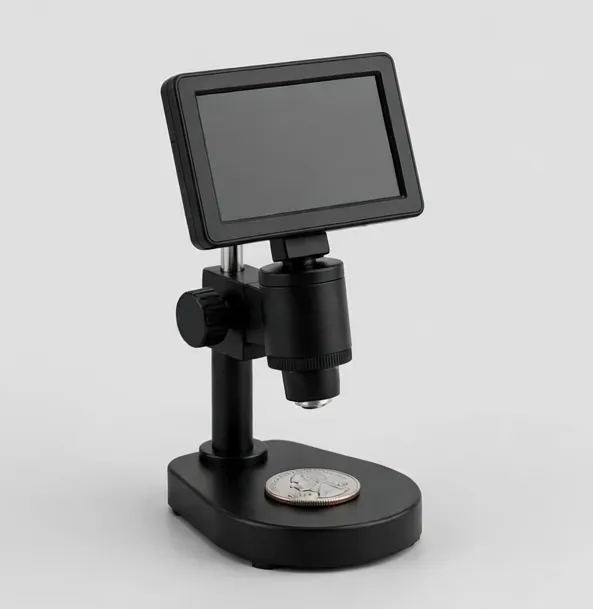
Whole-coin view on screen, with HDMI for closer die and mint-mark study
MicroHub CoinView 7" Coin Microscope
7-inch LCD10x–1300xWorking distance to 5.5 in
$119.99
Sample catalog — order confirmed by email
Magnification is the first number every buyer reads and the last one they should trust at face value. This guide explains what the number is made of, why two microscopes with the same lens can claim wildly different powers, and which figures correspond to the things you actually want to see.
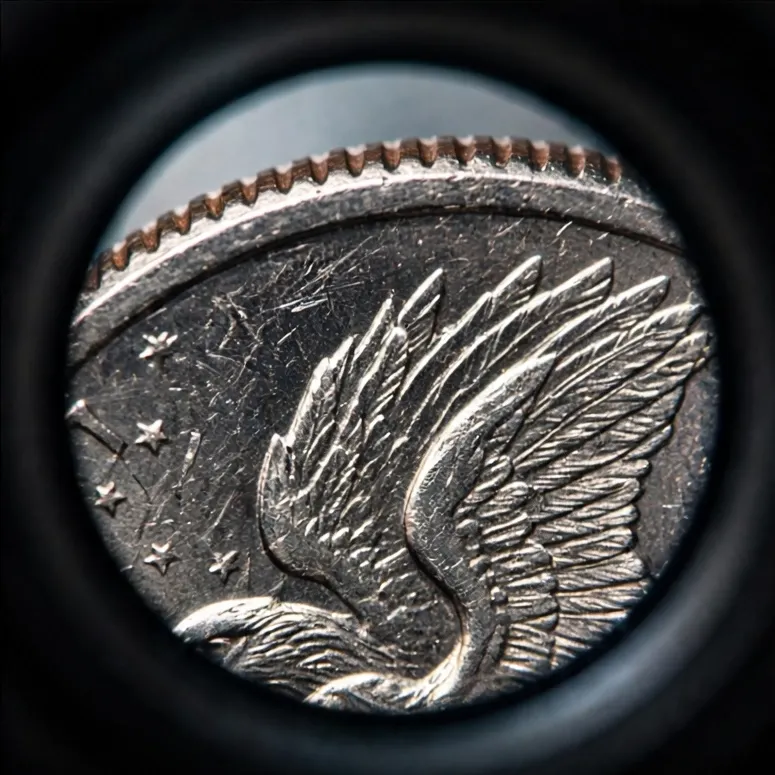
Magnification says how much larger an object appears compared with viewing it with the naked eye at a standard distance. A 10x view makes a 1 mm feature appear 10 mm across. It is a statement about apparent size — not, by itself, about how much detail you can see.
That second property is resolution: the smallest separation at which two points still appear as two points. Resolution comes from the lens quality and, in digital systems, the sensor. Magnification without resolution is empty enlargement — the microscopic equivalent of zooming into a blurry photograph. Much of microscope marketing sells exactly that.
On a compound microscope, total magnification is the eyepiece power multiplied by the objective power. A 10x eyepiece with a 40x objective gives 400x. Add a 20x eyepiece and the same objective gives 800x — real, but dimmer and narrower, which is why 2000x configurations exist on paper and disappoint on the bench.
On a stereo microscope, magnification is the zoom range of the optical system with the fitted eyepieces — commonly 7x–45x with 10x eyepieces, shifted by auxiliary Barlow lenses (0.5x widens and lowers; 2x narrows and raises). Every figure can be traced to glass. That traceability is what honest specification means.
A digital microscope's displayed magnification depends on the lens, the sensor and the size of the screen showing the image. Put the same camera and lens on a 24-inch monitor instead of a 7-inch screen and the "magnification" roughly triples — without one photon of extra detail. This is why headline numbers for near-identical digital models vary so much between brands.
Digital zoom goes further: it crops and enlarges the captured image. Listing language like "up to 1600x" typically means optical range multiplied by digital zoom at maximum crop. At that setting the image is large, soft and noisy — usable for framing, not for judging fine detail.
None of this makes digital microscopes dishonest instruments; it makes their specification sheets a puzzle. The fair comparison figures are the optical working range, the sensor resolution (1080p vs 4K), and the screen or monitor size the maker assumed. MicroHub product pages state magnification with its derivation for exactly this reason.
Whole coins and stamps: about 5x–20x on screen — the challenge is fitting the subject in, not enlarging it. Mint marks, die varieties and hallmarks: 20x–60x. Solder joints and PCB traces: 10x–45x. Jewelry settings and watch parts: 10x–40x with depth perception.
Prepared slides: 40x shows tissue structure and large cells; 100x–400x is the cellular heartland; 1000x (oil immersion) reaches bacteria. Pond life lives happily at 40x–200x. Insects, minerals and plant surfaces: 10x–60x in stereo or top light. Notice the pattern: nearly all real microscopy happens at or below 400x, and nearly all bench inspection below 60x.
Magnification and field of view trade against each other: double the power, halve the width of what you see. At 1000x on a compound microscope, the visible field is a fraction of a millimeter — glorious for a bacterium, useless for finding it. Skilled microscope use starts low, centers the subject, and climbs.
This is also why coin microscopes are a separate design: their low-power, wide field fits a whole large coin, something a high-power-first instrument physically cannot do. When a listing leads with enormous magnification for a coin microscope, it is advertising the wrong end of the zoom range.
Ask four questions of any specification. What is the optical range, stated without digital zoom? What sensor resolution captures the image? What screen size does the magnification claim assume? And what is the working distance at the powers you will use?
Then sanity-check with the subject table above. If a model promises ten times the magnification your subject needs, the promise is marketing; the resolution, light and stand are the product. Stores that publish their derivations — as every MicroHub listing does — are telling you they expect to be checked.
Two microscopes at identical magnification can produce utterly different images, and the difference is resolution plus contrast. Resolution is set by the objective's numerical aperture — its light-gathering geometry — and, in digital systems, sampled by the sensor. Contrast is set by lighting and, on compound microscopes, by the condenser and diaphragm: close the iris slightly and a transparent, invisible specimen gains structure; open it and brightness returns at contrast's expense.
This is why experienced users fiddle with light and diaphragm more than with zoom. The detail was always arriving at the sensor or the eye; contrast is what lets you perceive it. When comparing instruments, an honest 1080p sensor behind good glass and good light will out-resolve a careless 4K chain at the same magnification — numbers multiply quietly, but photons do not lie.
The inflation is structural, not a single villain. Screen-based magnification depends on display size, so a maker quoting a bigger bundled screen truthfully reports a bigger number for the identical lens. Digital zoom is a real feature that marketing promotes from "enlargement available" to "magnification". And competitive listings escalate: once one seller prints 2000x, the honest 200x listing looks weak to a scanning buyer.
The defense is the derivation habit: ask what the lenses alone deliver, what the sensor resolves, and what screen the claim assumes. Any seller — this store included — should answer all three on the product page. Where the answers are missing, assume the least flattering interpretation; experience suggests you will usually be right.
You can measure your own microscope's honesty with two cheap tools: a stage micrometer (or a quality ruler for low powers) and a familiar detailed subject. Photograph the micrometer at each zoom setting: the frame width in millimeters gives your true field of view, and field width divided into your screen width gives a defensible displayed magnification. Compare it with the box claim and you will know exactly how much of the claim was zoom and screen.
For resolution, photograph the finest repeating pattern you own — a printed halftone, an etched scale, the lines of a fingerprint — and find the power where more zoom stops revealing new structure. That point is your instrument's honest ceiling. Working below it, everything is information; above it, everything is enlargement. Knowing the ceiling makes you a better microscopist than any specification sheet can.
Handheld and pocket microscopes deserve their own paragraph because their claims are the boldest. A pocket instrument's lens typically delivers a modest optical range; the path to a 1000x claim runs through a small sensor's image enlarged on a phone screen. The honest use — identification, quick documentation, sharing — needs perhaps 50x–200x of displayed size. Judge pocket models by battery, focus smoothness and how steady the image sits in the hand, and let the four-figure claim pass by unexamined.
Stereo microscopes sit at the opposite pole: their 7x–45x is all glass, and their users rarely wish for more, because depth and field are the currency of hand work. Compound microscopes occupy the principled middle: every figure multipliable from printed eyepiece and objective powers. Learn to ask which of the three families a claim comes from, and magnification marketing loses its power over you permanently.
Claim one: a pocket microscope "up to 1000x". Decompose it: a small lens, a phone-sized sensor image, and digital enlargement on a phone screen. The honest translation is "a portable viewer that enlarges enough for identification and sharing" — which may be exactly what you need, bought with open eyes.
Claim two: an LCD bench microscope "1600x" with a 10.1-inch screen. The lens system contributes a genuine working range; the big screen contributes display magnification; a digital zoom stage contributes the rest. On your own smaller monitor the same instrument would claim less. Judge it by its 1080p sensor, its lighting and its stand — the parts that cannot be redefined.
Claim three: a compound microscope "40x–2000x". Fully traceable: two eyepiece sets times four objectives. Yet the working range most users live in is 40x–1000x, because the 2000x configuration trades brightness and field for size. All three claims are, in their way, true — and all three mislead a buyer who reads only the number. The derivation is the antidote, every time.
While magnification gets the headlines, three quiet terms shape daily satisfaction. Field curvature decides whether the edges of the view focus with the center — plan objectives flatten it, which matters for photography and measurement. Eye relief decides whether glasses-wearers can see the whole field through an eyepiece; long sessions punish short relief. Depth of field decides how much of a three-dimensional specimen is sharp at once — it shrinks as magnification climbs, which is why low powers feel forgiving and high powers feel fussy.
None of these appear in a headline number, and all of them appear in your second hour of use. When a listing bothers to state them — or states the honest limits of its optics — it is signaling the same thing this guide has argued from the first paragraph: the seller expects to be checked, and has written the specification accordingly.
Only if the optics and light support it. On compound microscopes, 2000x uses high-power eyepieces that narrow and dim the view; most users work at 1000x or below. On digital models, the higher figure is usually digital zoom — enlargement without new detail.
Because the promised number typically combines maximum optical zoom, maximum digital zoom and an assumed screen size. Your working view at a practical setting is the honest figure.
1000x optical with an oil-immersion 100x objective, on a well-prepared slide. That is the one common task that genuinely needs four figures.
No — it gives more resolution: finer detail within the same magnification, and cleaner digital zoom. Magnification comes from the lens; the sensor samples what the lens delivers.
Enlargement beyond the resolution of the optics: the image gets bigger but not clearer. It is the technical name for the soft, impressive-looking views in exaggerated listings.
Whole-coin view on screen, with HDMI for closer die and mint-mark study
$119.99
Sample catalog — order confirmed by email
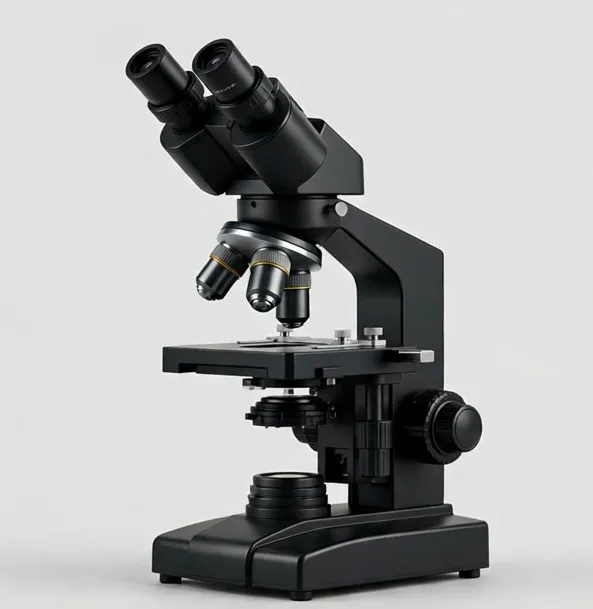
Binocular comfort for longer lab sessions, with a double-layer mechanical stage
$339.99
Sample catalog — order confirmed by email
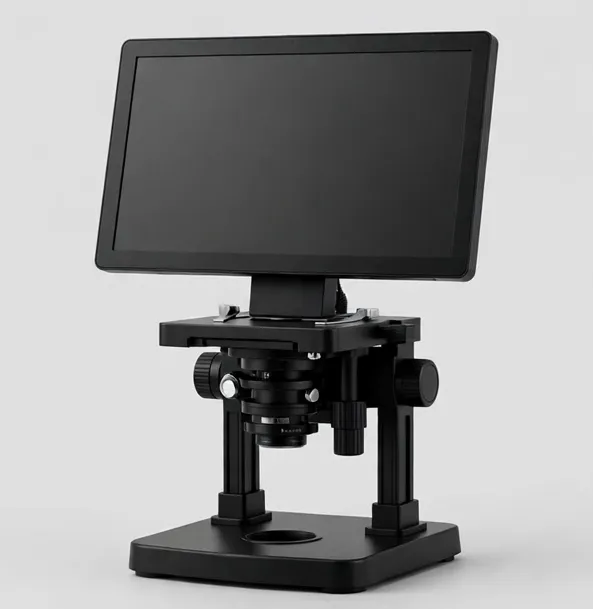
Big-screen 10.1-inch microscope with HDMI output for teaching and shared viewing
$169.99
Sample catalog — order confirmed by email
Related categories: Digital Microscopes · Compound Microscopes · Coin Microscopes